

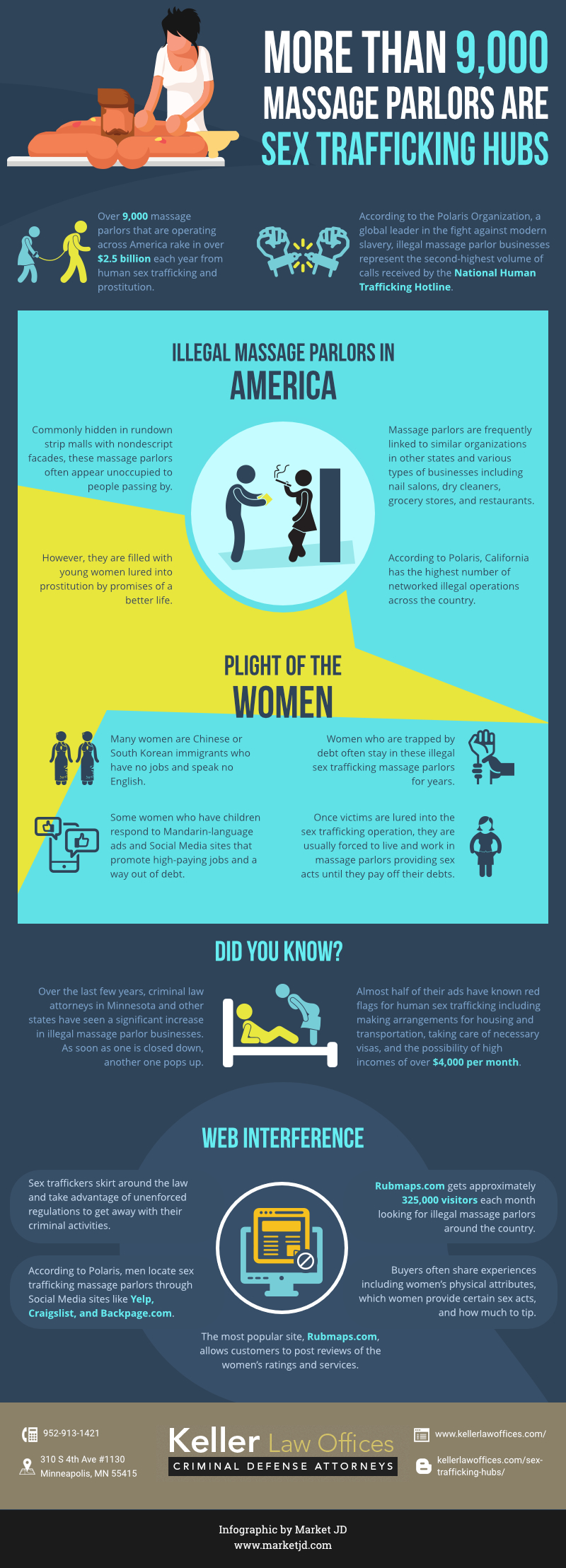
Over 9,000 massage parlors that are operating across America rake in over $2.5 billion each year from human sex trafficking and prostitution. According to the Polaris Organization, a global leader in the fight against modern slavery calls about illegal massage parlor businesses represent the second-highest volume of calls received by the National Human Trafficking Hotline.
(Article continues below infographic)
On This Page
Illegal Massage Parlors in America
Commonly hidden in rundown strip malls with nondescript facades, these massage parlors often appear unoccupied to people passing by. However, they are filled with young women lured into prostitution by promises of a better life. Many women are Chinese or South Korean immigrants who have no jobs and speak no English. Some women who have children respond to Mandarin-language ads and Social Media sites that promote high-paying jobs and a way out of debt. Once victims are lured into the sex trafficking operation, they are usually forced to live and work in massage parlors providing sex acts until they pay off their debts. Women who are trapped by debt often stay in these illegal sex trafficking massage parlors for years.
According to Polaris, California has the highest number of networked illegal operations across the country. Massage parlors are frequently linked to similar organizations in other states and various types of businesses including nail salons, dry cleaners, grocery stores, and restaurants. Almost half of their ads have known red flags for human sex trafficking including making arrangements for housing and transportation, taking care of necessary visas, and the possibility of high incomes of over $4,000 per month.
Over the last few years, criminal law attorneys in Minnesota and other states have seen a significant increase in illegal massage parlor businesses. As soon as one is closed down, another one pops up. Sex traffickers skirt around the law and take advantage of unenforced regulations to get away with their criminal activities.
According to Polaris, men locate sex trafficking massage parlors through Social Media sites like Yelp, Craigslist, and Backpage.com. The most popular site, Rubmaps.com, allows customers to post reviews of the women’s ratings and services. Buyers often share experiences including women’s physical attributes, which women provide certain sex acts, and how much to tip. Rubmaps.com gets approximately 325,000 visitors each month looking for illegal massage parlors around the country.