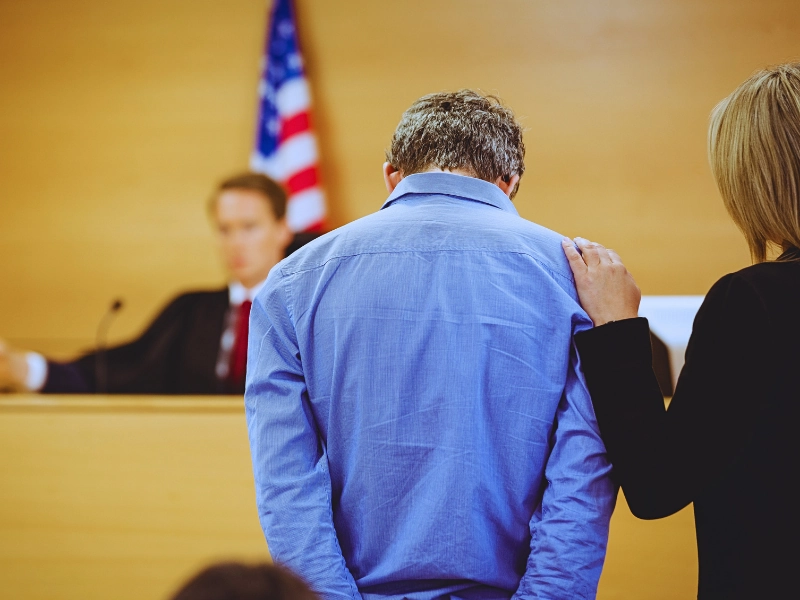



Burnsville Police arrested a man at his work on suspicion of gross misdemeanor driving while impaired in early December. Authorities accuse the man a scraping the side of a Burnsville liquor with his car as he allegedly left the business during the early afternoon December 5.
Staff of the liquor store along County Road 11 called police to report the alleged car accident. Workers apparently told police that a man had visited the store around 1:30 that afternoon. Workers claim that they declined to sell alcohol to the man, who then is accused of stumbling into the parking lot and leaving the business. Workers claim that the man ran his car into the side of the building on his way out of the parking lot.
Police claim that visible scratches were detectable on the bricks of the building, but no structural damage had occurred. Staff from the liquor store gave police a license plate number, which authorities traced to the Burnsville man. Authorities say that they found the man at a Bloomington restaurant where he is an employee. It is not clear from the media how authorities located the man at his work.
Police claim that the man’s car was parked outside the restaurant and showed signs of damage. Authorities claim that the man admitted to driving the car, and further claim that he said that he did not stop after scraping the building because he did not think there was any damage.
Police turned the accident investigation into an apparent DWI probe after officers claim that the man smelled of alcohol. Police claim that a test for alcohol registered a 0.24 percent alcohol level two hours after the alleged accident. The man was scheduled to appear this week on two counts of gross misdemeanor DWI and a charge of hit and run.
Generally, Minnesota law allows the state to seek enhanced penalties for DWI allegations involving higher levels of alcohol. For instance, a driver who measures 0.20 percent or more on a first time offense can be charged with third-degree DWI, which is a gross misdemeanor offense carrying a maximum sentence of up to one year in jail.
Source: Burnsville Patch, “Burnsville Man Faces DWI Charges After Crashing Car Into Liquor Store,” Clare Kennedy, Feb. 7, 2013